
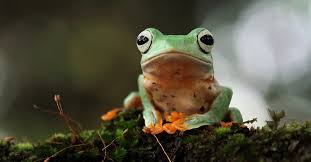
I have always found it amusing that the term GEMBA walk sounds like “Gemba,” which means frog in Sinhalese (the language of Sri Lanka). This coincidence sparked a bit of curiosity—and I began to explore whether there might be a meaningful connection. I looked into the behavior and characteristics of frogs to see if there’s anything we can learn from them that aligns with the principles of Kaizen. Here’s a brief summary of that reflection.
- Frog in Nature
- GEMBA Walk in Kaizen
Similarities:
- A frog stays close to the ground and is highly alert to its environment.
- A leader goes to the GEMBA (the actual place of work) to observe what’s happening firsthand.
- Observation from the source – both engage directly with their surroundings.
- Frogs pause, watch, and listen before taking action.
- GEMBA walks are about listening to employees, watching processes, and understanding before making changes.
- Deep observation before action – no jumping to conclusions.
- Frogs are adaptive, adjusting to water, land, and air conditions.
- GEMBA walkers must be adaptive, responding to what they see and tailoring solutions.
- Flexibility in response.
- Frogs leap only when necessary, with precision.
- In Kaizen, change is deliberate, data-driven, and focused on continuous improvement.
- Intentional action – move when it’s the right time.
- Frogs are quiet and calm – they only croak when needed.
- GEMBA walkers should observe without disrupting, offering insights or questions calmly.
- Respect for the environment – being present, not disruptive.
Global Manager, Project Management Office (PMO)
VisionFund International